
Can’t start, won’t start: Over 150 new military programs face delay under a CR
The Defense Department will be operating under a continuing resolution until lawmakers successfully pass a fiscal 2027 budget.
The Defense Department will be operating under a continuing resolution until lawmakers successfully pass a fiscal 2027 budget.

Today the US may have the political conditions necessary to build a larger Navy, but it lacks a publicly articulated maritime strategy, argues naval veteran Bruce Stubbs.

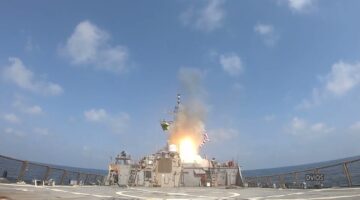
Expanding manufacturing capacity is critical to producing missiles, radars, and launch systems.
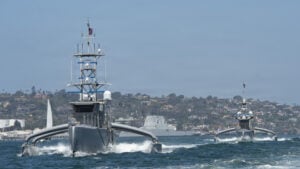
A new medium unmanned surface vessel marketplace will focus on production-ready, mission-capable platforms that could be delivered as early as fiscal 2027.

The Navy has the chance to bake in cybersecurity from the beginning as it builds its Golden Fleet concept.

Follow on ships could cost anywhere from $9 billion to $13 billion per vessel if orders begin today, according to the Congressional Budget Office.

“I did not expect to be told to build a battleship when I got this job, and I will tell you, I'm extremely excited about it,” said Rear Adm. Derek Trinque, the Navy's director of surface warfare.

There is no single answer to the drone threat, pushing the Pentagon toward a broader mix of defenses.

A new big boss? A new big ship? 2025 held a lot of change for the sea services with even more foreshadowed coming in 2026 and beyond.

The new vessel, coming in around 30,000 tons, will be capable of carrying surface-launched nuclear missiles, creating what Navy Secretary John Phelan called a new nuclear deterrent.

“Recent operations from the Red Sea to the Caribbean make the requirement undeniable,” Chief of Naval Operations Adm. Daryl Caudle said.
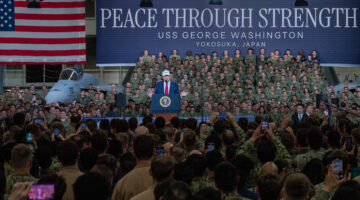
“The interesting part of this is it’s not just a kind of fleeting presidential idea, but this is, in fact, something that does kind of resonate with what the Navy's finding it probably needs to do with the fleet through its own work,” one analyst said.

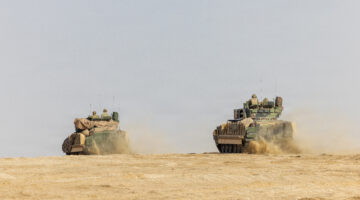
Army vehicles like Bradley need greater power at the sprocket for speed, braking, and manueverability.